Against a Penal Substitute:
God is Importance.
So, how you relate to Him, is most important to you.
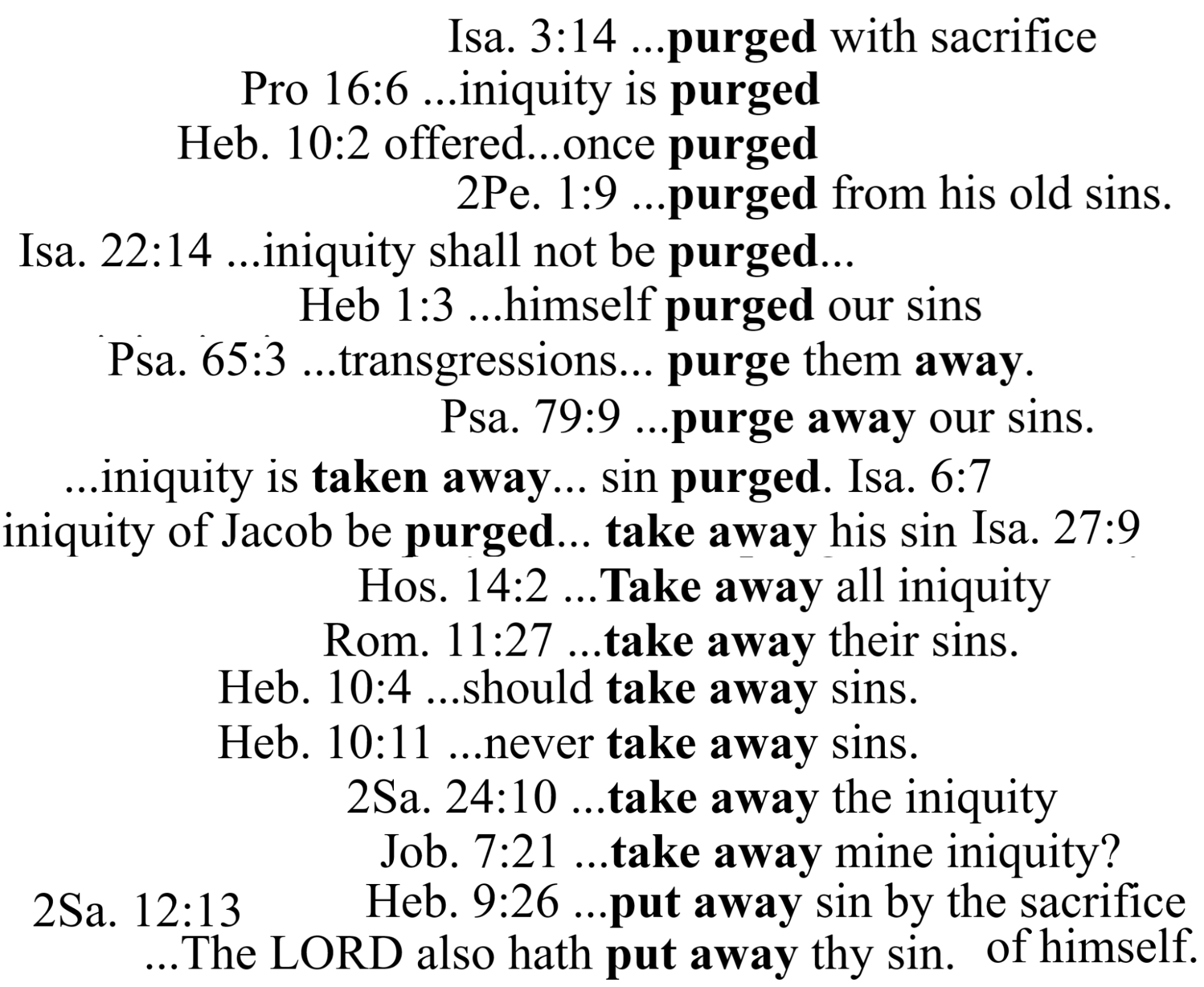
Over twenty times, we see a sacrifice is to carry away sins. Even so, God won't be faulted for not putting sin to death preferably with His body, or at least passively with ours (hell.) Yes, God prefers to actively empower sin's death. To give His body for that, is glory. He doesn't refuse HimSelf the honor to die away sins.
A sinner’s current condemnation is not yet finally executed. There’s no hell for you yet. Death comes before judgment (Heb 9:26- 8), so Jesus died before He could become a PS. PS is basically wrath to come, injected into thee hours on the cross. Jesus “wrath” exhausting and outlasting sin in this life, prevents God’s wrath in the next life from being exhausted upon Jesus for three hours.
The cross is a sin outlet, not a wrath outlet. People get wrath, not sin. Christ is Head, and means no sin to God ward. Jesus is not firstly a wall for us against God’s wrath but a wall for God, against our sins. Keep your priorities straight. Jesus death prevents Jesus from a PS. His wrath, meaning condemnation executed at the cross, prevented PS wrath.
The Bible says that God doesn’t account sin to us, but righteousness. The Bible doesn’t say about either of those being accounted to Jesus, but PSAT does.
Adam left God for us all, (the law recaptured us by sin) and Christ left sin for us all.
Sin= “transgression of the law” (1 Jn 3:4)
The law worketh wrath: for where no law is, there is no transgression.(Rom 4:15)
A law is “a system of rules a community recognizes as regulating.”
So, a law defines a relationship.
For example: law of sin (Rom 4:15,) law of Christ…
God's Lamb takes away sin "in His body" or "in His flesh."
Lev 16:21 Sin goes on the goat. But still, they put the hand on the Lamb's head as well. So, I think the symbolism is the same.
The Lamb is not hurt as a sinner, but only as sin. (Hurt and death aren’t punishment.) The sin put on the Lamb is not imputed to the Lamb. An animal can’t mean your sins against God, but it can die- and that’s why it’s used. Why spotless? So that it doesn’t become a sort of PS.
“put away sin by the sacrifice of himself.
God saves punishment for hell, but destroys sin for heaven. Final punishment awaits the eternal realm. Jesus can only die in the temporary realm. And He did, with sin. So sin is gone before He enters eternity. Meaning, no punishment for anyone. Jesus death in the temporary realm prevented eternal danger.
Heb 9:27 And as it is appointed unto men once to die, but after this the judgment:
Heb 9:28 So Christ was once offered to bear the sins of many; and unto them that look for him shall he appear the second time without sin unto salvation.”
2Cor 5:21 For he hath made him to be sin for us, who knew no sin; that we might be made the righteousness of God in him.
Sin not sinner. Jesus was made sin. But knew not the sin He carried. Unlike Adam and Eve, He never forsook God to join another. So, He died with sin, still never knowing them, never trusting them spiritually. Thus His God, raised Him up from them.
Notice also the parallel. God becoming our physical victim, would be a problem, unless we deduct it was for forgiveness. He was made what God rid. We are made what God accepts. Moreover, what we did wrong- He was made. And what God did right we were made. He was our work, we were His.
The Old Testament Lambs were not punished while they took sins away. So also, Christ. On the cross sins die, not sinners punished. Basically, He doesn’t replace us, but our sins.
Col 2:8-14 Beware lest any man spoil you through philosophy and vain deceit,
… putting off the body of the sins of the flesh by the circumcision of Christ: buried with him in baptism, …dead in your sins and the uncircumcision of your flesh (as not sanctified with the Spirit yet)…quickened together with him, having forgiven you all trespasses; blotting out the handwriting …contrary to us, and took it out of the way, nailing it to his cross;
1Pe_2:24 Who his own self bare our sins in his own body on the tree
(Rm 8:3, 34) Who can condemn us? Christ. But instead: “Son in the likeness of sinful flesh, and for sin, condemned sin in the flesh”
Imputed doesn’t mean put. Imputed means reckoned or accounted for… His righteousness is imputed to us, not our sins to Him. Jesus carried our sins through suffering to death. Suffering shows resistance; the death was not accidental.
1Pe_4:1 suffered for us in the flesh…
“For”(hyper) doesn’t have to mean a substitute. He gave His life, in the place of our release, and anything can be a sort of exchange. But that’s too vague for PS.
Heb 12:2 for(anti) the joy that was set before him endured the cross, despising the shame,
Heb 2:9 Jesus,…made a little lower than the angels for(dia) the suffering of death…
Now, common sense says that God can pre-give (forgive, give afore) us more than we can steal, especially to change our motive. But on the cross we see (not only man against God) but God against sin, not men. That is, Jesus is putting away, condemning sin(Rom 8) with His body to justify God in the Spirit (1Tim 3:16.) How? Taking sin away from God, is a performance which declares that God doesn't accept the sin He tolerated, meaning sin isn't right in God's opinion. ("Just" and "Right" are the same Greek words.) Like, look at the blood beat out of me; this is real toleration, not a play toleration.
PenSubs like Rom 3:25-6. In simple words, it says:
God tolerates sin, so He tolerated our sins.
This toleration isn’t sin.
The propitiation is evidence that God is without sin.
Romans 3:25 cannot justify PSAT, without their assuming an implication. Moreover, assuming the opposite of what the text says is likely a wrong assumption. I mean, PSAT assumes that because God wasn’t offended at the cross, He must have been offended (to empty His stored offenses.) Since you could equally read in the opposite interpretation, there’s no reason for PSAT to leach Rom 3:25 unless to deceive.
Particularly, PenSubs like that word propitiation which comes from an old Hebrew root meaning, covering (of the mercy seat. Heb 9:5) God is happy because He doesn’t see our sins.
Therefore, PSAT merely benefits from Rom 3:25-6 a platform to assume PS. It is noteworthy that assuming the antithesis may be the worst type of assumption. They assume: Because He’s not offended by sin here, He must have been already offended by sin here.
Blood cleanses us from all sin. (1Jn 1:7)
Washed us from our sins in His Own blood. (Rev 1:5)
Like water washes, Jesus blood went down to the ground with impurities, sin. And He gives His blood to God, not just to evidence the washing, but to receive it’s power.
His sacrificial blood to put away sin, was payment enough to release us. No PS debt besides.
What was paid for? Release. That’s what ransom and redeem mean.
Jesus paid the redemption price, (Matt 20:28) a ransom to loose us from sin.
Christ has redeemed (released) us from the law's curse and to God, (with His death) (Gal 3:13)
(God sent Him to save us so) so Jesus gave HimSelf a ransom (release) for all (1 Tim 2:6)
Gave HimSelf… to redeem (release) us from all iniquity(Tit 2:14)
Obtained eternal redemption (release) for us. (Heb 9:12)
Christ labors to purge transgressions, not pay a debt. Our debt is trashed, unpaid. The PS itself is only about the debt so it doesn’t go here; but let’s speculate where Christ takes the sin to death away from us and God? Without the connection to God, we offend God. So Jesus crucified that independence on a tree, because that’s where it came from. So, sins become accidents, meant to lack will but not to be judged like people. They can die though, and Jesus died them.
But are sins paid? No, but the Bible says:
Forgiven
Freed from sin
Lay not this sin
Will not count sin
Sin is not counted
Take away our sins
Remember no more
Sins may be blotted out
Hid from Thy face…and covered (quoting David)
Hide a multitude of sins. James 5:20
(The scapegoat wasn't offered to God, but instead sent far away... As east from west...cast into the depths...)
God’s wrath: (only for enemies)
...he that believeth not the Son... the wrath of God abideth on him. John 3:36b
...He reserveth wrath for His enemies. Nah 1:2b
...for the wrath of God .... men who hold the truth in unrighteousness Rom 1:18
...for (sins) the wrath of God cometh on the children of disobedience: Col 3:6
It says children, because they’re not yet held fully responsible as they will be in hell. From another aspect: They are fully responsible, but in a different way. Nature gives any life a chance to adapt, repent; otherwise they die. We should attribute that gentleness to God.
What about us?
Eph_2:3 … were by nature the children of wrath, even as others.
By nature, means we lacked a spiritual connection with and blessing of God. Without which we could do nothing He accepts. Both the relationship and works were lacking. That’s called “sin nature.” (btw, the secondary, more passive definition for “sin nature” is: man’s observed tendency to sin.) Until judgment, no spot is yet prepared for people in the devil’s hell. After judgment, their place in heaven will be given to another.
John 3 says we're condemned already for not believing! The referenced were not in hell. So, if it’s our condemnation He bears, (not just our sin) that condemnation will be dead before Jesus could suffer it in the afterlife. Of course, the Bible never says that God condemns Christ, even in our place. (Christ is doing the condemning both of our sin, and not of us.)
By the way, we see peace and reconciliation with the cross passages, not wrath. He is slow to wrath, for people to repent. God is angry with and hates the wicked, meaning hard heart. But God is long-suffering for sake of the elect.
God (grievously) forsook Jesus to men:
Cry of Dereliction
... My God, My God, why hast Thou forsaken Me? Matt 27:46
(vinegar)
Jesus, when He had cried AGAIN with a loud voice, yielded up the SPIRIT.
(vinegar)
Jesus cried with a loud voice, and gave up the SPIRIT.
...When Jesus had cried with a loud voice, He said, Father, into Thy hands I commend My Spirit: and having said thus, He gave up the SPIRIT. Luke 23:46
(vinegar)
...He said, "It is finished": and He bowed His head, and gave up the SPIRIT. Jn 19:30
Context from Psalm 22:
1 My God, my God, why hast thou forsaken me? (to oppressing men)
why art thou so far from helping(not hurting) me, and from the words of my roaring? (Gethsemane) 4 Our fathers trusted in thee: they trusted, and thou didst deliver them. (from oppressing men)
6 But I am a worm, and no man; a reproach of men, and despised of the people.
7 All they that see me laugh me to scorn: they shoot out the lip, they shake the head, saying,
8 He trusted on the LORD that he would deliver him: let him deliver him, seeing he delighted in him. (He saved others; Himself He cannot save)
16 ...they pierced My hands and My feet.
18 They part my garments among them, and cast lots upon my vesture.
19 But be not thou far from me, O LORD: O my strength, haste thee to help me.
20 Deliver my soul from the sword; my darling from the power of the DOG.(not GOD)
24 ...(God) hath not despised nor abhorred the affliction of the afflicted; (God doesn’t abhor the One being afflicted!) neither hath he hid his face from Him; but when he cried unto him, He heard. (Did not hide His face) Heb 5:7-9 Who in the days of his flesh, when he had offered up prayers and supplications with strong crying and tears unto him that was able to save him from death, and was heard in that he feared; ...learned he obedience by the things which he suffered; ...being made perfect, He became the Author of eternal salvation unto all them that obey Him;
Observation from that quote:
He doesn't use the affectionate and spiritual term, "Father."
Other scripture implies that Son of God referred to the Son of Man, Jesus
Order: 1. "Forsaken" 2. vinegar 3. "It's finished"/"into thy hands" (loud cry.) 4. gave up the Spirit It's not in John's logical doctrine. It's not in Luke's emotional observations.
It's in Matthew, because He's quoting an OT Psalm. And it's in Mark as it's attention grabbing.
Jesus despises the suffering why? For the joy before Him (Heb 12)
He was hungry, and tempted in all points as we are. Heb 4:15 (Gal 3, under the same curse. 100% man.) The forsaking was before His Spirit left His body.
The body without the spirit is dead, implies James.
You ask "why?" in order to change the situation not being critical of God. He didn't wish suicide. From context, people felt He was calling for someone. (He wanted God)
No one can imagine suffering completely undeservingly
Abraham and Ishmael "gave up the Ghost" Gen 25 Issac, Jacob also. Job talked about it. Jeremiah spoke of it. esp. Jer 14:10 People speculate that Jesus was deprived of feeling God's favor toward Him. But God truely and faithfully favored Him anyway. God was the only One He could relate with at such deep level.
...God left (Hezekiah), to try him, that he might know all that was in his heart. 2 Chron 32:31 Also, reason was withheld from Nebuchadnezzar. Dan 4:36
Has a PS been the most likely interpretation of any verse I gave so far? Consider that, as we continue peeling away atonement verses from PS, one by one.
Why'd He die?
...Christ died for our 2. sins(to purge them) according to the scriptures; 1Co 15:3
...He was cut off out of the land of the living: for the transgression of my people was he stricken. Isa 53:9
Death hath no more dominion over him. For in that he died, he died unto 2. sin once: but in that he liveth, he 1. liveth unto God. Likewise reckon ye also yourselves to be 2.dead (not paid or punished) indeed 2. unto sin, but alive 1. unto God Rom 6:10
For to this end Christ both died and rose; and revived, that he might be 1.Lord both of the dead and living. Rom 14:9 ...it behoved Christ to suffer, and to rise from the dead the third day: (to fulfill prophecy) and that repentance (2.from sin 1.to God) and 2. remission of sins should be preached in his name. Luk 24:46-47
Who 2. died for us, that, whether we wake or sleep, we should 1. live together with him. 1Thess 5:10 And that he died for all, that they which live should not henceforth live unto 2.themselves, (Lordship) but unto 1.him which died for them, and 1. rose again. (for God) 2 Cor 5:15
New covenant… 1. they shall all know me, 2. for I will forgive their iniquity, and I will remember their sin no more. Jer 31:34 (Hebrews quotes this passage twice.)
Offering, not payment: (His body was needed, Heb 10:5)
the offering of the body of Jesus Heb 10:10
by one offering Heb 10:14
given himself for us an offering Eph 5:2
offered one sacrifice for sins Heb 10:12
Christ was once offered to bear the sins of many... Heb 9:28
through the eternal Spirit offered himself without spot to God, Heb 9:14
Baptism about His death and resurrection.
Communion:
... my body...in remembrance of me... cup is the new testament in my blood: ...in remembrance of me. ...shew the Lord's death 1Co 11:26
What's the Bible say about payment?
2 Pet 2:1-3 denying the Lord that bought them, …through covetousness shall they with feigned words make merchandise of you…
1Cor 6:18-20 Flee fornication… sinneth against his own body…ye are not your own… bought with a price: 1Cor 7:23 Ye are bought with a price; be not ye the servants of men.
So we see that Christ’s (sin rinsing) blood is more valuable than money. And God owns you more. But these three sanctification verses are not evidence of a PS atonement.
There’s yet one other passage which may link the atonement with payment. Rom 6:23 reads “wages of sin is death.” James 1 also points out that sin results in death. But here we see an extra meaning. Namely, wages are compared to a gift. That is, the earned vs the unearned. However, not everything unearned is Penal Substitution. And if everything was a PS, then Penal Substitution would mean nothing.
Firstly, it's the only actual paid passage they have. Secondly, just because it's a payment doesn't make it a PS. Thirdly, we notice that if it's a penalty package, it's only a package of our deaths, and not a package of our hells collected into His death. But the PS package can't exist as only a package of our deaths. Therefore, this verse cannot help PS.
Again about Rom 6:23: Sin results in death, we worked that.
It is most likely that our enemy death is not a PS. Just as the death of a butterfly is not a PS. And it is most likely that what is earned is not a PS. Your boss doesn't pay you a PS. Well, that's the explicit. But implicitly, death seems to be not directly from God, as opposed to PS. Like, why would God create a devil to do evil, if God wanted the blame? So, why do they like this verse? Simply because of the word, “wages.”
A law doesn’t necessarily use penalties to enforce its rule. For example, the NT has no penalties.
If one is dead (since Adam) to their first spiritual connection with God, and now won’t accept the new relationship with God their eternal habitation will be away from God. They were cast out of the old relationship because of evil doings. But they forfeit the new relationship because of unbelief.
Select PSAT quotes:
Wayne Grudem, a highly respected Reformed theologian: God... "poured out on Jesus the fury of his wrath: Jesus became the object of the intense hatred of sin and vengeance against sin which God had patiently stored up since the beginning of the world."
Wyatt Graham, director of The Gospel Coalition said "This act implies that God hates humans since he would have poured wrath upon humans if not for the work of Christ’s cross."
Isaiah 53
Isa 53:10a to bruise Jesus: pleased the LORD
Notice "to bruise Him" is an infinitive. That's what pleased the Lord. Scripture doesn’t directly say God smote Jesus. And since God is ultimately responsible for all evil, we cannot at all say that Christ being on the cross at all favors a PS interpretation.
God handed over Jesus to men. That’s only pragmatically, a death sentence. And God is ultimately responsibility for everything requiring PS to require a direct link. So, let’s pretend you find that direct link, a passage where God directly smites Jesus (when Jesus gives the sacrifice.) Still hurt is in most cases is not necessarily paying a penalty. This means, PS is too random than to add to the Bible.
Isa 53:10b He hath put Him to grief:
Notice the KJV italics: It's saying, God did grievously (forsaking Christ to men.) It was grievous. What grieves? Death. Whose? His Son's. Thus the italics. That's not punishing anything or venting PS on Jesus. Would PS be a likely implication though? As likely as adding other random motivations. So, not likely.
Isa 53:11a He shall see of the travail of his soul, and shall be satisfied:
He was satisfied when He saw His Son bruised. It was a great and satisfying work or cause. It makes sense without any PS. Would PS be a likely implication though? Any heresy could say that God was satisfied with it. It’s not a PS debt being resolved.
Isaiah 53:4-5 PSAT sees this as saying: We thought He was hurt for his sins, but really He was hurt for our sins. I have no need to disagree. More generally, I might interpret this: "We only thought He just being punished, but really he was sacrificing away sins."
Other Isa 53:5
wounded for our transgressions,
bruised for our iniquities: (died for our sins)
the chastisement of our peace was upon him;
with his stripes we are healed. (like, washed clean of sin by His blood)
Isa 53:6 the LORD hath laid on him the iniquity of us all. (Multiple passages like 1 Peter 2:24 talk about bearing sin, which doesn't mean that Christ either meant or paid any of them.)
A PS is not the best interpretation of any PSAT-framework verse so far, right?
Gal 3:13 “made a curse for us” We could actually now say(Rm 8:34) that as Judge He has the potential to be a curse to us, but He won't. Of course, this verses isn’t saying that. It says that He was cursed. (Deu 21:23 …he that is hanged is accursed of God;)
Saying that Jesus is a curse, sounds strange. PSAT can use strange language verses because people are rightly careful not to toss out random interpretations for them. But these mysterious verses shouldn’t disagree with what’s well known.
Sometimes people stretch this to mean that Jesus was united to our reason for being cursed. Like after dying, He’s no more one flesh with sin and it’s curse. Death resolved that link we made, and there never could be spiritual intention link from nonspiritual sin.
Obviously, Jesus isn’t punished for the good deed of carrying sins away. PSAT only says He’s punished while carrying sins. Either way, seems superficial because God didn’t want the sins around. They should think that His “wrath was emptied” only while sins were carried away, and not some extra fee.
Exo 34:7 (God forgives and) will by no means clear the guilty. (Heb: no clear clear) The double is emphasis. God is either merciful, or strict. Two different standards. PSAT preachers use this verse to say, God uniformly punishes all (including vessels of mercy.) But of those punished, some are saved. This interpretation is illogical to this verse as it does clear some who were guilty.
The cross was a Dark Day but not because God was excising a hatred of us.
Paul said that he would go to hell for unbelievers. But Christ is better than Paul. He also said in Philemon, I will repay, although you owe me much more. Will God then repay? He gave His Son.
We saw above, Ps 22:6, that Jesus felt like a worm, rather than a man. Isa 52 end: His visage was so marred more than any man, and his form more than the sons of men. The Hebrew can be interpreted, beyond recognition as a man. Either way, PS is not so much about his visage and form.
PSA people like this passage:
1Co 5:7 Purge out therefore the old leaven, that ye may be a new lump, … Christ our passover is sacrificed for us. We’re passed over because we’re cleansed, but not first paid for.
The Hebrew word for ransom can be translated, bribe. But it’s up to the translator to determine the best connotation for God.
My favorite retribution verse: Psa 9:16 The LORD is known by the judgment which he executeth: the wicked is snared in the work of his own hands. Higgaion. Selah. (Psa 9:15 The heathen are sunk down in the pit that they made: in the net which they hid is their own foot taken.)
Wrath only on Enemy Status: (Which is what that state of hell is for)
Gen 15:16 But in the fourth generation they shall come hither again (to execute condemnation): for the iniquity of the Amorites is not yet full.
said Phinehas had turned His wrath away from the children of Israel, that He consumed not the children of Israel in His jealousy... said He gave unto Phinehas His covenant of peace.
the LORD saw that they humbled themselves,... I will not destroy them, but I will grant them some deliverance; and my wrath shall not be poured out upon Jerusalem... when he humbled himself, the wrath of the LORD turned from him, that he would not destroy [him] altogether:... humbled himself for the pride of his heart, [both] he and the inhabitants of Jerusalem, so that the wrath of the LORD came not upon them
the LORD turned not from the fierceness of his great wrath, wherewith his anger was kindled against Judah, because of all the provocations that Manasseh had provoked him withal. (the Lord had always warned them) the wrath of the LORD arose against his people, till [there was] no remedy
They're punished when they're bad enough. God doesn't blame the wrong person. Rather perhaps, punishment after judgment seems to spill back into this life? (Or, mini pre-judgments maybe discounts/credits real judgment to come)
Because of a poor current relationship, you bring up past sins. But when the relationship is good, you don't pull out all those memories to pay them, but instead forget wrongs until the relationship gets sour. Since Jesus got and maintains for us a good relationship with God, the sins are never brought up again as to need any pay. Pay legitimizes an enemy state which God never meant for us.
Jesus told the parable of the forgiven debtor (Matt 18,) but when He went outside of His Lord, not forgiving as He had been forgiven- then the Lord pulled back over Him all His former sins. So also, in Ezekiel 33, non- of his good shall be remembered if He turn back to evil.
Sin’s death prevents jealousy. Christ holds no charge, so God’s gloriously free to hold no charge. God was bound by His mercy to provide justice for the oppressed who call on Him. The cross creates a starting point to measure God’s mercy with the law. Jesus goes past the farthest oppressed, thus owning the law, which frees God from treating believers like unbelievers. In positive terms, God is earning glory by using Jesus to deal with those who call upon Him. Christ’s dying zeros the law, and thus becomes the law by being everyone's sins through debt consolidation. This consolidation is more real than not, but unbelievers don’t accept it, holding also unforgiveness instead of God’s forgiveness. For God to use a PS (because of our affair with sin) would be optional, as sin is dead. PS would be only like a maybe, closure weakness for jealousy. Joab warned David about that gap though.
I notice a two-fold atonement in the Bible. The New Covenant consists not without both works (after salvation) and relationship.
Works
It’s impossible to have less rewards than opportunities to earn those rewards. God prepared the max number of rewards which He for knew. If you don’t go to heaven, or just miss out on some rewards- they will be given to another. God has provided enough physical inheritance for each believer to "PAY OFF" anything that believer physically does, including deeds before salvation. Those with God's Spirit have liberty in the flesh to steal their own heavenly reward. This is actually and interestingly "Christian liberty." This physical liberty is for the spiritually dependent. Whether or not you are born of God, determines whether you'll be in heaven or hell. What you do in this body is what determines your RECOMPENSE in the respective afterlife.
At the expense of your inheritance in Christ, God PREVENTS you from sinning against Him physically. Why? Because God won't contradict HimSelf. (This prevents what PSAT attempts to resolve.) Again, God has us steal from OURSELVES, instead of Him. God WOULDN'T let us steal from Him. Why? God is passive toward those children who may yet repent. Meaning he holds back, doesn't execute their condemnation.
To let his dependent sin is His fault. But since He's without fault, that's impossible. To sin against God, would contradict God. As His child, He never lets you do that because He has no contradictions. So, God holds nothing against His dependents. That would contradict Him.
Adam was God’s dependent and should had remained so. Nevertheless, God keeps all men in a semi dependent, low responsibility state till judgment. (Satan and the beast have no need of death before judgment.) God treats us as only children of wrath by not yet executing the condemnation we bear. This is the gentleness which begins all life and from we derive “human rights,” or “a good send off.” God gives us this time for us to repent and Christ to prevent a PS as logical.
Basically God provides the authority to hurt Sam, provided we basically serve Sam in the afterlife. God can't contradict HimSelf, but He can contradict Sam provided a just RECOMPENSE.
Relationship
Our spirits are due to be born of God. We WERE not God's spiritual dependents BEFORE our spiritually connecting to Him. Nothing is held in favor of unbelievers, and nothing is held against believers. Without the Spirit, God accepts no work. It is enough, for Jesus to just lay down and die when we kill Him. He can freely give us that much. But that is not enough for the spirit behind the action, I mean the lack of God's motives, I’m talking about a relationship with God. We're not good on the inside, even if Jesus gives us everything on the outside. We have His death outlet for our deeds, but what about the deeper part in our heart? That part which lacks His intentions. Christ gave HimSelf to God. So God gave Christ's Spirit into all of our hearts, to make us good. So how does getting His Spirit make sins go away? As our Spiritual Head, connection with God, or Mediator: He's our ONLY NEW WAY TO SIN against God. But He never did, nor will. Thus, He has spiritual disabled us from doing anything against God. It's all filtered. There you go!
(God never contradicts HimSelf actively, through His dependents. So it was necessary to be released from the devil’s shackles of independence. Christ took power from satan. But satan is not the spirit of our sins like we are.)
More perspective:
God is paid us spiritually, sin is paid death physically, but PS adds a third (not due) payment (separation of enemies from God via Christ) which is just a confusion of the real two. These two payments are all over scripture and even referred to in a single term: ransom or redeem.
We were redeemed, (released- likely for pay.) It's a compound concept: It means both release (from sin to God), and also secondarily: for blood payment. Sacrifice is about ablation, meaning separation from sin. A sacrifice is costly. It costs the blood or life of the Lamb. Because of a one time cross payment, we escape eternal hell.
The cross is not filling some degree of retribution from blood. God is more simply given blood to use for the trashing of sins. The blood is a covenant as Noah's covenant which says: "Yall are wicked, and with that understanding... I'll forgive." God was not killing man's representative on the cross, but we were killing His reflection. Jesus reflected God's suffering of our contradictions. (Not man’s invisible suffering from God.)
PS (Calvin) might say that we are "inseparable" from sin. But it is more natural to put off being God's enemy then to continue without dependence on His Spirit.
PS scholars are divided between PopPS and HyperPS. HyperPS thinks PopPS is ineffective. PopPS thinks HyperPS is contradictory. A common word that divides them is "guilt." How was Christ guilty? I use this fault line. In place of "guilt," I use the word "intention" because I think it clarifies.
God always interprets a work by its intention, even when we do things unintentionally. Christ lacks no intention. And if we depend on His intentions, then He does not spiritually, really intend the sins that He bears. So the God of truth, would never condemn Him. So just by His bearing of sin, there's no condemnation. Wrath is prevented not spent at the cross. It's a sin outlet more than a wrath outlet.
PS has God pay for a list of sins, but God's family has no sins. They say that He pays for us, not as family; but as enemies. But once we're family, we don't need those sins paid. Nor do we need them paid, when we're enemies. Besides, He certainly wouldn't pay to establish the works of His enemies. But He would pay for His family deeds- which is reward, not PS.
If Jesus, despite having the family Spirit, shared our lack of intention- then, we would be paid for, not as dependents but enemies of God. This requires PS retribution, perhaps.
They say hell is exchanged for the cross. Ok. Vague. We might fairly add a satisfaction lens: The cross satisfied God in place of our hells. It's just a lens, nothing substantial. You can't say that it's wrong to filter out certain colors of the gospel. It could be helpful sometimes. But we could try a second lens over that satisfaction lens, by calling the satisfaction a penalty... Two lenses to narrow down the gospel. So, of course I see some of the gospel through their jargon, but what's the point? I'll tell you the point. PopPS pointless jargon is only there to prime you for HyperPS retribution. Of course, nobody can disagree when it's only jargon. But it sets all the terms in place, so that you fall into HyperPS. What color does PS filter? Mercy. By filtering mercy from the gospel, you are primed to require PS to get mercy back. But you understand that it is only jargon, not something that actually happened. There was never an ultimate need for PS, but only in the eyes of the beholder temporarily until PS cancels itself. HyperPS is when you create substantiality from jargon.
There's three things PS is wrong about: 1. God condemning. 2. Son sharing our poor intentions. 3. Penalty for sins, rather than the Spirit setting us apart from sin.
About Me:
Your relationship with God is most important to you. Sin blocks that relationship. So, sin must be removed! Jesus does that ablation. But PSAT prevents it with a Penal Substitution.
We all agree with general ablation. But I am forced to add Ablation-Only, in order to prevent PSAT from preventing general ablation with a PS. So you can call me, Sola Ablation.
You may have two problems with me:
The problem of evil is only the temporary day we live in, and in which our Lord was crucified. God made the problem of evil for repentance. The problem of evil means we have some responsibility that we shouldn’t have. For God is worth the evil, the cross declares that rather than trying to minus it (as PSAT). Jesus suffered in the flesh to reflect God suffering our intentions.
The second problem you may have with me is that your flesh would use my truths as license to sin.
Summarizing PS:
PSAT 1:1 God's always gets even. (Not Just! say they, to ablate sin without PS. But that's Self-Justification at the expense of God's attributes.)
PSAT 1:2 Christ's death and our hell, are in a relationship of payment and fee.
PSAT 1:3 Without this fee being paid, there's no forgiveness of sins. (Nor with the fee, When God owes you as much as you owe Him that PS is complete. For sins to be PS debt is mutually exclusive of sins being garbage to purge.) PSAT 1:4 God poured wrath on the Son. (No, God didn't condemn Him but left Him to men.)
PSAT 1:5 Jesus took our place. (Jesus wasn't guilty of the sin He carried.)
PSAT 1:6 The PS debt is paid off. (The debt doesn't exist. Jesus justifies no sin with pay, but us. That is, He paid His blood to carry sins away, as God justly so hates them.)
My perspectives:
He died because we were dying in sin. Death was His tool to bring us life. The devil had death's power which Jesus destroyed, abolishing death. Death no more has dominion over Him, but He has its keys.
Christ was given to carry our sin. So, Christ offered Himself to God for us all, tasting death for every person to release us from sins (against the Old Covenant/relationship.)
Those who believe Jesus blood of the New Covenant, partake of the propitiation; which shows God's right to remit sins He previously forbore. For God made Jesus sin over us, Who now Mediates and intercedes.
We have forgiveness, even redemption (a release from sin to God paid with blood), from the law and its curse (because Jesus had been under both.)
Through his cleansing, justifying blood (through suffering and offering of his body in sacrifice,) He brings us to God and sanctifies us (as God wants.)
The blood is witness, testifying what we must confess and agree with God about. The cross was a declaration of truth that God is worth the evil which He bears on the cross and all evil that He tolerates and suffers to get us. Sin is contradiction, and there's no contradiction in God's family. Sin is buried with His body, and the only one that can resurrect it, won't.
Jesus disabled believers from offending God by becoming our only Head to God ward. And intending none of those sins which He bore, any wrath from God toward believers is prevented. Then, because justice can't require more retribution than the original offense which the offended obviously already was offended by, there could be no wrath from God left for Christ's cross anyway. So, what was Christ suffering on the cross? Our sins against Him, as His blood washed away those sins.
Christ needs only suffer as man, not as a God. Jesus was God for the sacrifice, so the cross was us crucifying God's Son. Still, as a man, the suffering only needed to make God's Son plenty offended of us. (You'd think it easy for a truly innocent man. And such an innocent would only be merciful.) Why? Because if no one sins, we would not crucify Him.
Our sin bearer must die. Why? PS is an attempt to answer. PopPS says, That's just the rules (that explains nearly nothing.) HyperPS says, probably retribution. (Retribution is relatively random thing to pick.) Regardless of their theories, we know God eventually ablates the sin anyway.
Propitiation is wrath prevented, not felt. It's a declaration of what God does (us) and doesn't(sin) forgive. It's truth telling and performing. A recognition, a clarification. It's confessing away sin. Making a separation between sin and God's family. It's sacrificing, suffering, giving afore what we may steal (redistributing the inheritance...) It's a blood testimony. It's the terms of agreement. That's propitiation.
God sends His Son for glory- to suffer, tolerate in the flesh: sins, contradiction, and forbidden things: dying, ceasing, and ablating those fleshly things back to the earth from whence they were stolen from those who replaced their need of God's Spirit with them. Those guilty, condemned by God's law rather than justified, who reject the filtration of Christ's Headship will be judged by God with hell revenge. But those other condemned, intentional sinners who rather accept dependence to His justification and Lordship, cannot but forgive because only Jesus can be their Creditor. Who, sharing His inheritance; pre-gives, licenses us what to Him is accident. Jesus redeems us, meaning: His paradoxical declaration was paid for our release. The payment was the cost of a faulty law's demands. But God's law recognized it's difference from that other law of sin. That blood confession, that recognition is called propitiation (for reconciliation.)
God rewarded Jesus completely for the sacrifice.
Adam and you ended the relationship with God and sin, respectively. How? God went and sin was taken, respectively. Again, our relationship to sin(condemnation) was deprived as those sins died on the cross. God is no more jealous of our spiritual relationship to sin, because the object of that relationship is dead. So the penal substitutionary bereavement wouldn’t be a felt forsakeness of God as to God’s children, but of sin as to sinners. (Christ wasn’t a second fall of man)
People pay because they’re against things. For example, you pay for food, because you’re against starving. Now, God is against dwelling with sin, so His payment to rid sin was Jesus death. Meaning, Jesus slew sins with His Own body. It was worth the price. What would dying away that lack of relationship (lawfulness) or independence (lawlessness) look like? Simply put it back on the tree it came from. Again, God trashes sins! But that’s not PS. PSAT adds a PS to absorb wrath for no reason. But it makes itself needed by preventing God from removing sins, until He pays PS first. (Biblical? no.)
Nothing but PS makes PS needed. PSAT invites itself to the party as nothing else invites it. It goes on to lie about being the most invited. If I wrote a novel about a lover giving his life, it would take a twisted mind to infer I meant a PS. They excuse, that He does it because He’s God. So I repeat that He doesn’t do it because He’s God.
The penalty for our relationship with sin, is to die bereaved of sin, rather than be paid by a penal substitute. Only a spirit from God would be exhausted (equivalent to wrath exhaustion) under a penal substitute’s felt forsakeness. Likewise, a relationship with sin may actually thrive under a penal substitute. (Sin is nourished away from God.) God wouldn’t do that, so a PS debt circle is impossible unless it’s a scripturally detached.
Jesus died away sin, exhausting our spirits grabbing for earth. Accepting contradiction on earth, God gets us into heaven, holding nothing against His family. Where's our sin? Ablated. If He holds something against those depending on His righteousness, He contradicts HimSelf.
PS has God promises to retribute every sin. But inherent in every retribution, is the option to not retribute. For if God would at least retribute, how much more would He suffer the wrong because it's in His court. Anselm's assumption (Pre-PS) is that that would not be honorable. Yet Jesus's reflection of God showed the opposite.
What their forsakeness from God, rather than to men, is like:
PSA has extra penalty (a cross between the two real ones) for the doer(spirit or lack of spirit) of those sin. The physical penalty would be a precision ablation of sin only. However, during PSA's extra payment we are presented to God not as ourselves alone, but with sin that God didn’t mean for us to have.
We owe God our presence, but that comes with wrath until (via cross) either we are totally burned enough (total depravity.) Or just the trusting part of our spirit is burned enough.(Non-Calvinistic PSAT) Again, non Calvinistic PenSubs think God is jealousy on the cross burns up only of our link(trust) to others things, instead of HimSelf. But Anti-PenSubs agree with the hypercalvinist on a particular point. That is, we see our essence (eternal need of God’s Spirit) and trust (receiving) of man as one. (I mean total depravity would say that our essence and our trust for ungodly things is burned up on the cross altogether. Of course, anti-PS doesn’t agree there though.) But why do only the non-Calvinist PenSubs split the spirit of man (a need for God) from what that spirit (wants to) receive? Because the law of non-contradiction would undermine their form of PSAT. But there's an exception. And they use it. Two things can't be the same, except in a different way. (All anyone has to do to justify something is to conveniently say it’s “in a different way.” Then they add the PSAT frame to support their PS.)
Cross wrath is an absence of needed goodness, choking into it’s due annihilation any sinful part. What sin lacks, is completed. While spirits (us) of those physical sins are spiritual choked by PS, reciprocally God's wrath is exhausted. (And of course, Jesus wouldn't present sinners to God to provoke a wrath emptying, unless out of obedience. But agreement makes a bad choice, ok.)
PopPS is like forget all that. Let’s just create a middle man decree. (To avoid blaming God accidentally. Although ironically, they still call Him their PS law too.) It’s just an ordained penalty list! That’s all. Useless, but catchy.
Having no explicit, deductive, external justification; they rely on leech off various atonement verses, and definitions- lot’s of them. Which I like.
PS problems:
(God punishes based on the Head and Christ is our Head- If Christ bears our sins, there could be no penalty, nor should there be for any enemy of God, and if we turn away from God those sins should still not be paid)
PSAT thinks:
Rather than not, Christ preferred to absorb God’s wrath.
Rather than not, God preferred to be wrathful.
Sins carried away from God, don’t need paid.
Sins not carried away from God, will never be paid.
Sins supposedly carried straight to God, is called PSAT.
God is not against His Own good wrath, but sin.
PSAT substitutes our wrongs, for His wrath
This means, emptying wrath instead of sin.
That’s wrong.
Jesus death was temporary because things being a thief is temporary.
Eternal souls are forever.
If Jesus death was eternal (packaged into 3 hours), then He’s paying for a source of life outside of God. But God wants people to repent, believe.
Jesus released sins before He could be punished. His death, kept Him from being a penal substitute.
Sin is a problem, wrath is a proper response.
Ridding good wrath doesn’t rid the problem.
Since PSAT spends wrath, it’s superficial.
Thus God is more realistic than PSAT
Christ’s death took away sins.
Without sins, there’s no wrath.
PSAT’s wrath is causeless.
Paying wrath is to be against His Own wrath
Therefore, God cannot afford to pay.
But He can afford to pre-give our sins.
and so rid sins by giving them back,
If PS wrath doesn’t exist, it wouldn’t be at the cross.
PSAT says that without PS, PSAT wrath would be at the cross.
Then, PSAT is wrong.
If God holds sin against a dependent, He holds sin against HimSelf.
While those who aren’t His dependents, go to hell.
In either case, a PS isn’t needed.
PenSubs say that if we don’t understand PSAT we should trust God instead.
PSAT can’t be understood by any man (in that it cannot connect what’s not connectable), so we should all trust God instead.
PSAT tolls God from removing sin.
Furthermore, PSAT says God does it to HimSelf.
It’s wrong to prevent God.
PSAT thinks it’s ok, since it’s temporary.
God maybe passive toward sin, but that’s different than actively opposing HimSelf. He would not do the latter. So He wouldn’t do PSAT.
PSAT prevents God and His planned problem of evil, as a problem. We shouldn’t do that, it’s there for His glory. PSAT is self canceling. But so long as it lives, it never allows God to remove sin. Fittingly, it’s finished when sins are.
PSAT makes justifying God more inconvenient.
God’s worth the inconvenience. So, God’s also worth removing the inconvenience.
There are three with testify against PSAT:
1. Nature’s logic and common sense.
2. PSAT in that it cancels itself for not preventing God’s forgiveness.
3. It testifies boldly against itself through it’s followers' threats. But the more honest needs be shy about it.
PSAT doesn’t answer how Jesus died sins away,
but it does distract from the Jesus dying away our sins.
Is it better to keep sin from God or hell from us? PSAT says the latter. Then, PSAT is wrong.
Should there be a sin outlet, or wrath outlet? PSAT says the latter. PSAT is wrong.
PSAT doesn’t make God accept sin.
PSAT doesn’t make God more willing to forgive.
PSAT doesn’t ablate sins.
PSAT only satisfies itself.
PSAT’s cause is officially and conveniently for itself: mystery, but only of darkness
Wrath release is dealt with before it splatters, but
PSAT wrath release is dealt with spattering and splattered.
PSAT is a poor metaphor, or else it’s not a metaphor.
If it’s a real thing, PSAT’s pay is either the same or different than purging sin.
If it’s the same, it’s deceitful. If it’s different, it’s wrong.
It is funner and easier to say God condemns or destroys transgressions at the cross.
If God hated us,
He'd hate HimSelf -for trying to save us.
He would also hate HimSelf -for being against those who He’s for.
PSAT is a breach in Sola Scriptura.
Trusting God for PSAT, can be trusting PSAT in place of God.
God temporarily let’s PSAT oppose Him, so that it’s followers may repent.
Now, as you have been so fervent in spirit with PSAT, how much better will your zeal shine without it? There’s growth when the sun isn’t blocked.
A temporary course correction is all that’s needed, as opposed to an eternal PS. A PS couldn’t be eternal unless God supported sin that long, since sin has no life in itself.
However you say it: PS splits God and damns one as God doesn't justify Who He condemns. Yet if He did, then in that same way (passing the buck: us to Christ to sin) He wouldn't commit PS because sins would be already condemned without Christ. (note transgression can take the buck: die without eternally dying)
After Jesus died, Jesus was already preaching Jn 19:30, 1Pe 3:19. I mean, sins were already gone. Their justification through repetition is known as “the truth effect.”
God comes down, both pre-giving sins with His flesh, while giving us a new will with His Spirit.
God gives and pre-gives. Without Him, our nature is only to take. He designed us unable to replace Him. Even so, a love of being owed is the root of all evil.
Virtue for evidence:
They say, God is jealous and just. But an attribute goes both ways, it doesn’t tell how. (God is jealous to glorify His forgiveness. And pinned by the cross, He surpasses justice into a thick mercy.)
Here’s EVIDENCE that was given to me for Penal Substitution: (Notice these are basically threats; like, your God isn’t good without PS, so you better believe PS.)
-Mercy requires a PS.
-Mercy without PS undermines holiness.
-Mercy and justice only exist through PS.
-Without PS God's moral order isn't balanced.
-God demands a PS for sin.
1. A Penal Substitute is only required for the Spiritual Penalty.
2. The Spiritual Penalty is only required in as much as we are Part Sin.
3. We are Part Sin only in as much as a Penal Substitution pays.
Circle reasoning isn’t bad, but this PS circle leads to bad.
If God chooses a PS, then it is without necessity that we know of. The cause is unknown, speculative.
The PS circle is a mystery that we shouldn’t know, it cannot appeal to Divine Mystery since it is neither explicit from nor logically deducted from scripture.
The framework of PSAT uses plenty of scripture, but not the PS itself.
For application:
-Don’t preach God pouring wrath on Jesus
-Don’t say “paid the penalty” (PSA wrath feeds on “pay”) instead use Bible terminology, or similar.